




Minnesota Motorcycle Insurance: $200–$430/yr, 30/60/10 & Broker Help

Minnesota riders typically pay $200 to $430 a year for full coverage, or roughly $17 to $36 a month, with minimum-liability policies often landing well under $200 annually. State law requires 30/60/10 liability limits, and Minnesota motorcycle policies do not automatically include Personal Injury Protection. Your first move should be comparing quotes with identical limits across a few carriers, not just chasing the lowest sticker price.
TL;DR:
Minnesota motorcycle insurance costs typically range from $200 to $430 annually, with lower rates available for minimum-liability policies and certain rider profiles.
Insurers consider rider age, experience, and motorcycle type, with sportbikes costing two to three times more to insure than cruisers of similar profiles.
The state’s liability minimums are 30/60/10, but policies do not automatically include Personal Injury Protection, leaving a gap in medical coverage.
Riders should prioritize uninsured and underinsured motorist coverage and consider adding medical payments and custom parts coverage to fill coverage gaps.
Comparing personalized quotes through an independent broker helps avoid coverage exclusions and ensures you get appropriate protection for your specific situation.
Table of Contents
How Much Is Motorcycle Insurance in Minnesota?
Statewide estimates put full-coverage motorcycle insurance in Minnesota somewhere between $200 and $430 per year, according to cost modeling from MotoInsure. Minimum-liability-only policies run cheaper, sometimes half that or less, since you’re only paying for the state-required 30/60/10 protection with no collision or comprehensive attached.
Where you land in that range depends heavily on who you are and what you ride:
A commuter in their 40s with a clean record on a midsize cruiser often sees rates toward the lower end of the typical pricing range for full coverage.
A new rider under 25 with no experience typically pays a noticeable premium over that baseline, especially in the first year or two.
A sportbike owner on a liter-class machine can pay two to three times more than a cruiser rider with an otherwise identical profile, a gap MotoInsure’s data confirms is one of the biggest cost drivers in the state.
Quick fact: Published averages from sites like MoneyGeek and MotoInsure vary because they model different rider profiles and zip codes. Your actual quote will differ from any published average, sometimes by a lot, which is exactly why getting a personalized quote matters more than memorizing a number.
What Are Minnesota’s Motorcycle Insurance Requirements?
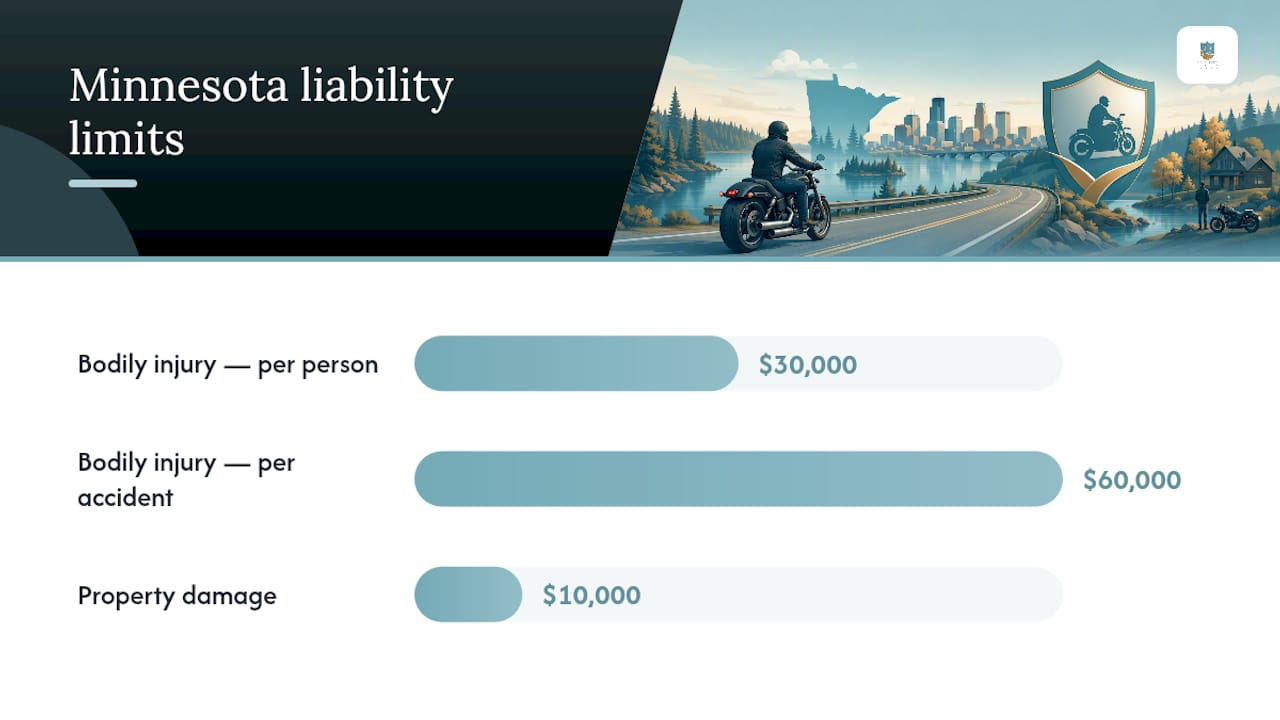
Minnesota law sets liability minimums at 30/60/10, meaning the prescribed minimum bodily injury and property damage coverage levels under Minnesota Statutes Section 65B.48. The same statute carries a notice that motorcycle policies are not required to include Personal Injury Protection, unlike standard auto policies. That’s a critical gap: if you’re hurt in a crash, your motorcycle policy alone may not cover your medical bills the way a car’s no-fault coverage would under Minnesota’s no-fault insurance rules.
When you register or reregister a motorcycle in Minnesota, you’ll need to show proof of that 30/60/10 coverage. Riders also need the proper license endorsement, which the Minnesota Department of Public Safety handles separately from insurance.
Failing to maintain required coverage can trigger registration and plate suspension.
Reinstatement usually requires filing new proof of insurance and paying administrative fees.
Lapses get flagged during routine state data checks, not just after an accident.
What Factors Affect Your Motorcycle Insurance Rate in Minnesota?
Insurers price Minnesota motorcycle policies using a mix of who you are, what you ride, and how you ride it. Age and riding history carry heavy weight. A rider with a DUI or an SR-22 filing requirement will pay substantially more, and some carriers won’t write that risk at all.
The bike itself matters just as much as the rider. Engine size and class push costs up fast: a 1000cc sportbike costs more to insure than a 500cc cruiser with the same rider profile, largely because of theft rates and repair costs. Custom parts and aftermarket accessories add value that needs its own coverage line, which raises premiums if you don’t ask for it explicitly.
Your choices shape the bill too:
Higher liability limits and lower deductibles increase premiums but reduce your out-of-pocket exposure.
Low annual mileage or seasonal storage (common in Minnesota’s off-season months) can qualify you for reduced rates.
Zip code matters. Twin Cities metro riders often see different pricing than riders in rural Minnesota, reflecting theft and accident-frequency differences.
Which Optional Coverages Should Minnesota Riders Consider?
Because Minnesota motorcycle policies typically skip PIP, a medical-payments endorsement fills a real gap. The Minnesota Department of Commerce specifically flags this as something riders should ask their agent about, since a basic policy alone may leave you covering your own medical bills after a crash.
Collision and comprehensive coverage make the most financial sense on financed or newer bikes, less so on an older machine worth a few thousand dollars. Uninsured and underinsured motorist coverage matters more than most riders assume, given that Minnesota’s own minimums leave a gap if the at-fault driver carries only the state floor. The NAIC notes uninsured motorist exposure is a persistent risk across states, not just a Minnesota problem.
Medical payments endorsement: fills the PIP gap basic policies leave open.
Collision/comprehensive: worth it on financed, newer, or high-value bikes.
UIM/UM: protects you when the other driver’s coverage falls short.
Custom parts and equipment coverage: insures aftermarket exhaust, paint, and accessories at agreed value.
Pro Tip: Ask for custom parts coverage by name. Standard policies often cap accessory payouts far below what you actually spent on upgrades.
How Can You Lower Your Minnesota Motorcycle Insurance Premium?
Getting an accurate comparison starts with insisting every quote lists the same limits, deductibles, and endorsements. The Department of Commerce warns that a “cheaper” quote sometimes just quietly drops UIM coverage or medical payments, which makes it look better on paper while leaving you exposed.
Take an MSF basic rider course. Many carriers offer a discount for completing training through the Motorcycle Safety Foundation.
Bundle your motorcycle with auto or homeowners coverage for a multi-policy discount.
Ask about multi-bike discounts if you own more than one motorcycle.
Pay the annual premium in full rather than monthly installments when your budget allows it.
Consider low-mileage or pay-per-mile options if you only ride seasonally.
Pro Tip: Shop again at every renewal, not just when you buy the bike. Carriers reprice risk pools constantly, and last year’s best rate rarely stays the best rate.
What Happens If Your Motorcycle Insurance Lapses in Minnesota?
A lapse in Minnesota doesn’t just risk a ticket if you get pulled over. State systems flag missing coverage, which triggers registration and plate suspension under Minnesota’s administrative rules on motor vehicle insurance. Reinstating that registration means filing new proof of insurance and covering added fees.
The bigger cost often shows up later. A documented lapse can push future premiums higher and, in some cases, forces you into SR-22 filing territory, which narrows your carrier options considerably.
Set calendar reminders well before renewal dates.
Ask about short-term seasonal policies if you store your bike over winter instead of letting coverage lapse entirely.
Loop in a broker before you let a policy expire, not after.
How Does an Independent Broker Help Minnesota Riders?
A broker’s job is straightforward: shop multiple carriers on your behalf, explain what each policy actually excludes, and handle the paperwork that connects your coverage to your registration. That last part matters more than it sounds. A carrier that’s a poor fit for a customized sportbike might be a great fit for a commuter cruiser, and an independent broker sees both sides of that market instead of one company’s rate sheet.
An independent insurance brokerage can work with multiple carriers and may charge no broker fees, making comparison shopping potentially cost-free for you.
Have your current policy, bike title, and mileage estimate ready before requesting quotes.
Ask specifically about UIM limits, medical payments, and custom-parts value.
Expect a comparison of options within a day or two once your information is submitted.
What Should Minnesota Riders Prioritize When Buying Coverage?
Don’t skimp on uninsured/underinsured motorist coverage or a medical endorsement. Those are the pieces that actually protect you, not just other people. If you have real assets, carry liability limits above the state minimum. Full coverage makes sense on a financed or high-value bike; an older bike worth a few thousand dollars is a reasonable place to accept some risk. Seasonal riders should ask about storage-period policies instead of letting anything lapse.
— Andrew
Get a Motorcycle Insurance Quote Through South Lake Agency
Using an independent insurance brokerage is a practical alternative to calling multiple carriers yourself: one conversation can provide quotes compared across many insurers, potentially with no broker fees added to your bill.

Requesting a quote takes just a few minutes. Have your bike’s year, make, and model, your current mileage estimate, and your driving history on hand, and an agent will walk through liability limits, medical-payments options, and custom-parts coverage so nothing gets left out of the comparison. If you also ride a car or truck, ask about bundling since that often unlocks additional savings on both policies. Start your motorcycle insurance quote today and see what a genuine multi-carrier comparison actually looks like.
This article is general information, not a substitute for advice from a qualified financial advisor. Consult a qualified financial professional about your own circumstances before acting on anything here.
Sources
Recommended
Comments