




BOP Insurance Coverage: What Small Business Owners Need

Updated: Aug 16

A Business Owners Policy bundles general liability, commercial property, and business interruption into one policy designed specifically for small and mid-sized businesses. That’s the short answer. If you’re running a retail shop, a small office, a café, or a service business with modest revenue, a BOP is almost certainly the most cost-efficient way to cover your three biggest everyday risks under one roof.
Here’s what that means in practice:
General liability pays for third-party bodily injury, property damage, and personal or advertising injury claims against your business.
Commercial property covers your building, equipment, inventory, and business personal property against covered losses.
Business interruption replaces lost income and continuing expenses when a covered event forces you to close temporarily.
One critical caveat: a BOP does NOT cover workers’ compensation, commercial auto, or professional liability. Those require separate policies, and skipping them is one of the most expensive mistakes small business owners make.
Pro Tip: Before you shop for a BOP, pull your current lease or any vendor contracts. Some agreements require specific liability limits or additional insured status — details that affect which policy you actually need.
Table of Contents
What is a BOP and how does it differ from a package policy?
A Business Owners Policy is a standardized insurance bundle created for small and mid-sized “Main Street” businesses. The Insurance Information Institute describes it as a package that combines property, liability, and business interruption coverage into a single policy, with endorsements used to fill gaps specific to your industry.
The key word is standardized. Insurers build BOPs around a defined risk profile, which is why they’re priced efficiently. Most follow the structure of the ISO BP 00 03 Businessowners Coverage Form, a standard template from Verisk’s ISO program that defines base coverages, built-in additional coverages, and optional endorsements.
A Commercial Package Policy (CPP) is the alternative for businesses that don’t fit that standard mold. According to Investopedia, a CPP lets you mix and match coverage lines with far more flexibility, which makes it the right tool for larger operations, specialty manufacturers, contractors with large fleets, or businesses with complex professional services exposure. The trade-off is cost and complexity: a CPP typically costs more and requires more underwriting.
For most small businesses under roughly $5 million in annual revenue, a BOP is the right starting point.
The three core BOP coverages explained
General liability
General liability is the coverage most business owners think of first, and for good reason. It pays when a third party claims your business caused bodily injury or property damage, and it covers personal and advertising injury claims like defamation or copyright infringement in your ads.
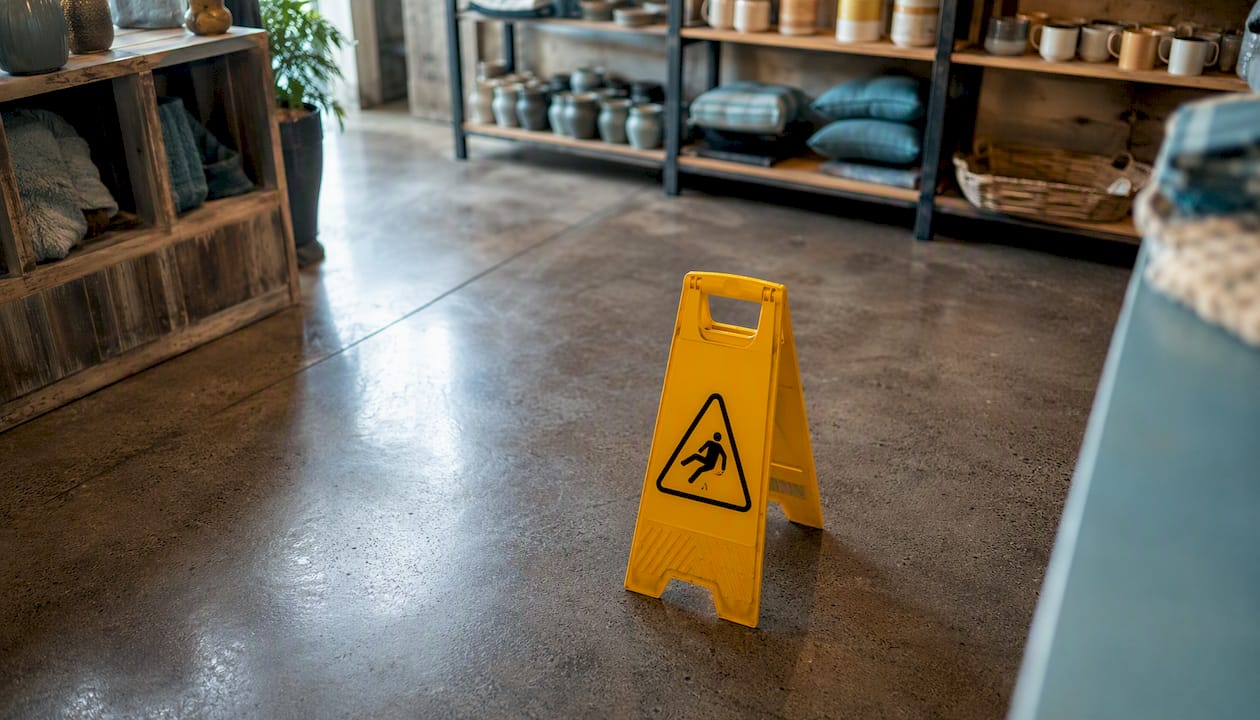
A customer slips on a wet floor in your store. A product you sold damages a client’s equipment. A competitor claims your ad copy copied their slogan. All three scenarios trigger general liability. Crucially, it also covers your legal defense costs, which can run into the tens of thousands of dollars even when you win. Reviewing your contracts alongside your policy matters here: master services agreements and leases can affect when an insurer’s duty to defend kicks in, so don’t treat those documents as separate from your insurance decisions.
Typical BOP general liability limits start at a million dollars per occurrence and two million aggregate, though higher limits are available.
Commercial property
This coverage protects your physical assets: the building you own, your business personal property (furniture, computers, inventory, tools), and property belonging to others that’s in your care. If a fire destroys your retail inventory or a burst pipe ruins your office equipment, commercial property coverage pays to repair or replace it.
One distinction worth understanding: named-peril forms cover only the specific causes of loss listed in the policy (fire, theft, windstorm). Special or open-peril forms cover all causes of loss except those explicitly excluded, which gives you broader protection. Many standard BOPs default to named-peril; ask your broker whether a special form is available.
Valuation matters too. Actual cash value (ACV) pays replacement cost minus depreciation. Replacement cost coverage pays what it actually costs to replace the item new. For a five-year-old commercial oven worth $800 at ACV but $4,500 to replace, that difference is significant.
Business interruption
Business interruption coverage, also called business income coverage, replaces the net income your business would have earned if a covered loss hadn’t forced you to close. It also pays continuing expenses like rent, utilities, and payroll while you’re shut down.
Many BOPs include up to a year of business income coverage by default, though the actual period varies by policy and insurer. Most policies include a waiting period of 48–72 hours before coverage kicks in. Extra expense coverage, often bundled with business interruption, pays for costs above your normal operating expenses to keep the business running during recovery, such as renting temporary space.
Scenario: A kitchen fire forces your café to close for six weeks. General liability doesn’t apply here. Commercial property covers the physical damage. Business interruption covers the six weeks of lost revenue and your ongoing rent and payroll.
What a BOP typically does NOT cover
Knowing what’s excluded is as important as knowing what’s included. The III’s BOP coverage guide is explicit: several critical coverage areas fall outside a standard BOP entirely.
Standard exclusions include:
Workers’ compensation: — Required by law in most states for businesses with employees. A BOP does not cover employee injuries on the job, period.
Two subtler gaps catch business owners off guard. First, off-premises property coverage is usually limited to a small sublimit (often $10,000 or less) for property temporarily away from your location. If you regularly take equipment to job sites or trade shows, that sublimit may not be enough. Second, vendor and client contracts sometimes require you to carry specific coverages or name them as additional insureds. Reviewing those contract terms alongside your policy before signing is worth the time.
Pro Tip: Pull your policy’s declarations page and read the exclusions section line by line. If an exclusion uses the phrase “arising out of,” that language is typically broad — it can exclude more than you expect.
Which businesses qualify for a BOP, and how do limits work?
Most insurers limit BOP eligibility to businesses with fewer than roughly 100 employees and annual revenues under approximately $5 million, though thresholds vary by carrier and industry. Businesses that typically qualify include retail stores, offices, small restaurants, apartment buildings, and service businesses with low physical risk profiles. High-risk trades — roofing contractors, manufacturers with heavy machinery, businesses with significant professional services exposure — often don’t qualify and need a CPP or standalone policies instead.
Limits work on two levels. General liability uses a per-occurrence limit (the most the policy pays for a single claim) and an aggregate limit (the most it pays across all claims in a policy year). Property coverage uses per-item and blanket limits. Setting your property limit at actual replacement cost, not a round number or last year’s figure, is the most common mistake owners make when buying a BOP.
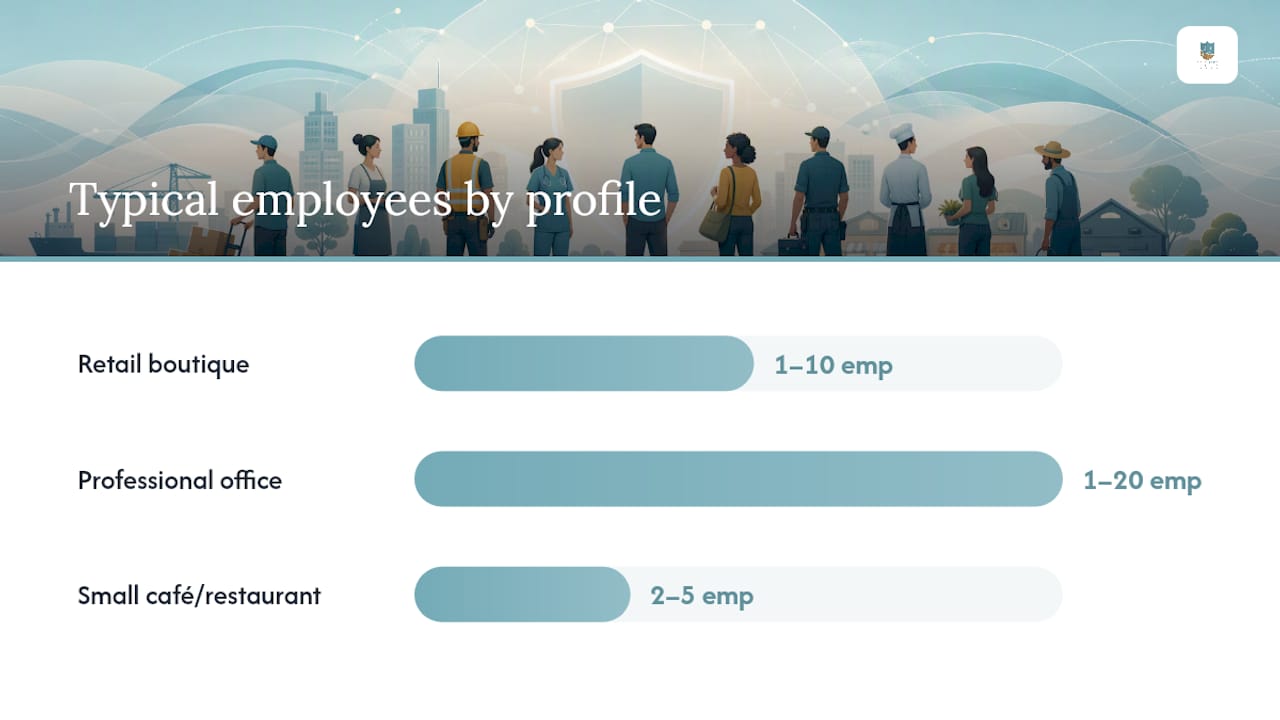
Business Profile | Typical Employees | Revenue Range | Common GL Limit | Property Limit | Deductible |
Retail boutique | 1–10 | less than half a million dollars | around one million/two million dollars | typically between one hundred fifty and three hundred thousand dollars | usually a few hundred to around one thousand dollars |
Professional office | 1–20 | a few hundred thousand to a couple million dollars | around one million/two million dollars | typically between fifty and one hundred fifty thousand dollars | usually a few hundred to around one thousand dollars |
Small café/restaurant | 2–5 | a few hundred thousand to one million dollars | around one million/two million dollars | typically between one hundred thousand and two hundred fifty thousand dollars | usually about one thousand to a couple thousand dollars |
Deductibles on BOPs are typically straightforward: you pay the deductible per covered loss, and the insurer pays the rest up to your limit. Choosing a higher deductible lowers your premium but increases your out-of-pocket cost at claim time. For businesses with strong cash reserves, a $2,500 deductible instead of $500 can meaningfully reduce annual premium.
How insurers price a BOP and what you can expect to pay
BOP premiums are driven by several factors working together. Location affects both property risk (weather, crime rates) and liability exposure. Claims history is one of the most significant factors: a business with prior losses pays more. Payroll and revenue signal the scale of your operations and your liability exposure. Building construction type (frame vs. masonry) and occupancy (what you do in the space) affect property rates. Security systems, sprinklers, and monitored alarms can lower premiums.
According to MoneyGeek, bundling coverages in a BOP typically costs less than purchasing the same coverages separately, though exact savings vary by carrier and industry. The practical implication: a BOP is almost always the right starting point for an eligible small business before you consider buying standalone policies.
Cost ranges vary widely. A small professional office might pay a few hundred dollars per year. A restaurant or retail store with higher property values and foot traffic pays more. Industry, location, and the limits you choose all shift the number significantly. The best way to get an accurate figure is to get quotes from multiple carriers with the same coverage specifications.
A few ways to manage premium without sacrificing coverage:
Raise your deductible from $500 to $1,000 or $2,500 if your cash flow can absorb it.
Install monitored security and fire suppression systems.
Bundle your BOP with other business policies through the same carrier.
Keep a clean claims history: small claims you could pay out of pocket often aren’t worth filing.
How to file a BOP claim and what to document
Speed and documentation are the two things that most affect how quickly and fully a BOP claim gets paid. Here’s the sequence:
Secure the scene and mitigate further damage. Move undamaged inventory, board up broken windows, shut off water. Your policy requires you to take reasonable steps to prevent additional loss.
Document everything before cleanup. Photos and video of all damage, taken immediately, are your most important evidence. Capture serial numbers on damaged equipment.
Pull your inventory and asset records. Before-and-after comparisons require a baseline. If you don’t have a current inventory list, start one now and update it annually.
Notify your broker and insurer. Call your broker first if possible — they can guide you through the notification process and flag any policy-specific requirements. Most policies require prompt notice; delay can complicate a claim.
Cooperate with the adjuster. Provide all requested documentation, get your own repair estimates, and keep copies of everything you submit.
Track every extra expense. Temporary relocation costs, equipment rentals, and overtime pay for recovery work are often covered under extra expense provisions. Keep receipts.
Collect payout and reconcile invoices. Match repair invoices to the adjuster’s estimate and document any discrepancies before signing a final release.
Claims documentation checklist:
Policy declarations page and endorsements
Photos and video of all damage (timestamped)
Pre-loss inventory records and equipment lists
Payroll records for the business interruption period
Receipts for all extra expenses incurred
Leases, contracts, or vendor agreements relevant to the loss
Repair estimates from at least two contractors
Insurers typically acknowledge a claim within a few days and assign an adjuster within one to two weeks, though timelines vary. For business interruption claims, the faster you can document your normal revenue (tax returns, bank statements, POS reports), the faster the income replacement calculation gets resolved.
How to choose the right BOP limits, endorsements, and provider
Buying a BOP without a clear checklist is how businesses end up underinsured. Work through these before you get quotes:
Decision checklist:
Calculate your property replacement cost (not market value, not book value — what it costs to rebuild or replace everything from scratch).
Estimate how many months of lost income your business could survive without insurance. That number sets your minimum business interruption period.
List every contract, lease, and vendor agreement that requires you to carry specific coverage or name someone as an additional insured. A certificate of insurance is often required to prove compliance.
Identify your top three liability exposures: foot traffic, products sold, professional advice given.
Check whether your state requires workers’ compensation for your employee count. If yes, that’s a separate purchase.
Questions to ask your broker:
Which carriers will write a BOP for my industry and location, and what are the differences in their forms?
Can you show me two or three deductible/limit scenarios with premium comparisons?
What endorsements do you recommend for my specific business type, and what do they cost?
How is the business interruption period measured — actual time to restore, or a fixed period?
What’s the claims-handling reputation of the carriers you’re recommending?
Red flags when comparing quotes:
A quote with unusually low limits that don’t match your property values or revenue.
Vague endorsement language that doesn’t clearly define what triggers coverage.
Exclusions that directly conflict with your core business operations (a food business with no spoilage coverage, for example).
A carrier that won’t explain how business interruption is calculated.
For businesses with significant contracts or master services agreements, reviewing those documents alongside your policy before finalizing limits is worth the extra step. Contract indemnity clauses can shift liability in ways that affect how much coverage you actually need. You can also review bundled business insurance approaches to understand how consolidating coverages affects total cost.
Key Takeaways
A BOP gives small businesses their three most critical coverages in one policy, but the real protection comes from setting limits correctly and adding the right endorsements for your industry.
Point | Details |
Three core coverages | A BOP bundles general liability, commercial property, and business interruption into one policy. |
Critical exclusions | Workers’ comp, commercial auto, professional liability, flood, and earthquake all require separate policies. |
Eligibility threshold | Most carriers limit BOPs to businesses with fewer than ~100 employees and revenues under ~$5 million. |
Endorsements matter | Cyber, equipment breakdown, spoilage, and employee dishonesty are the most common gap-fillers for small businesses. |
South Lake Agency Insurance Brokers | Shops 20+ carriers with no broker fees to find the right BOP and endorsements for your business. |
Why the cheapest BOP quote is usually the wrong one
The standard advice is to compare quotes and pick the best value. That’s true, but “value” in business insurance isn’t the premium number — it’s the ratio of what you’re actually covered for to what you’re paying. A BOP priced $400 lower than the next option often gets there by tightening sublimits, defaulting to named-peril property coverage, or quietly excluding cyber. You won’t notice until you file a claim.
The businesses that get hurt most by underinsurance aren’t the ones that skipped insurance entirely. They’re the ones that bought a policy, assumed they were covered, and never asked what the exclusions said. A restaurant owner who doesn’t know their BOP excludes equipment breakdown finds out when a $12,000 walk-in cooler fails on a Friday night. A consultant who didn’t buy E&O finds out when a client dispute turns into a lawsuit.
The BOP is a genuinely good product for the businesses it’s designed for. The problem is treating it as a complete solution when it’s really a foundation. Annual review with a broker isn’t bureaucratic overhead — it’s the mechanism that catches the gap between what your business does today and what your policy covers. Revenue growth, new services, new locations, new contracts: any of these can create exposure that your current policy doesn’t address.
One more thing that gets overlooked: umbrella liability. If your general liability limit is $1 million and a serious injury claim runs to $2 million, you’re personally exposed to the difference. A commercial umbrella policy sits above your BOP limits and pays excess claims at a fraction of the cost of raising your primary limits. For most small businesses, it’s the highest-leverage dollar in their insurance budget.
South Lake Agency Insurance Brokers shops the market so you don’t have to
Shopping for a BOP across 20+ carriers takes time most business owners don’t have. South Lake Agency Insurance Brokers does that work for you, at no broker fee. The agency’s licensed agents compare policies from more than 20 top-rated carriers, identify the endorsements your industry actually needs, and present options side by side so you can make an informed decision without wading through policy forms yourself.
The agency’s 97.3% client renewal rate and over 337 five-star reviews reflect what happens when clients get coverage that actually fits. South Lake Agency Insurance Brokers clients save an average of $2,246 by having a broker shop the market rather than going direct to a single carrier.
If your BOP doesn’t include workers’ compensation and you have employees, that’s the first gap to close. If you need a general liability quote as a standalone or as part of a broader review, the agency can turn around quotes quickly. Reach out to South Lake Agency Insurance Brokers for a policy review or a new BOP quote. Bring your current declarations page, a rough estimate of your property replacement cost, and your last two years of revenue figures, and the conversation will be efficient.
Useful sources
Recommended
Comments