




What Roof Age Means for Your Home Insurance Coverage

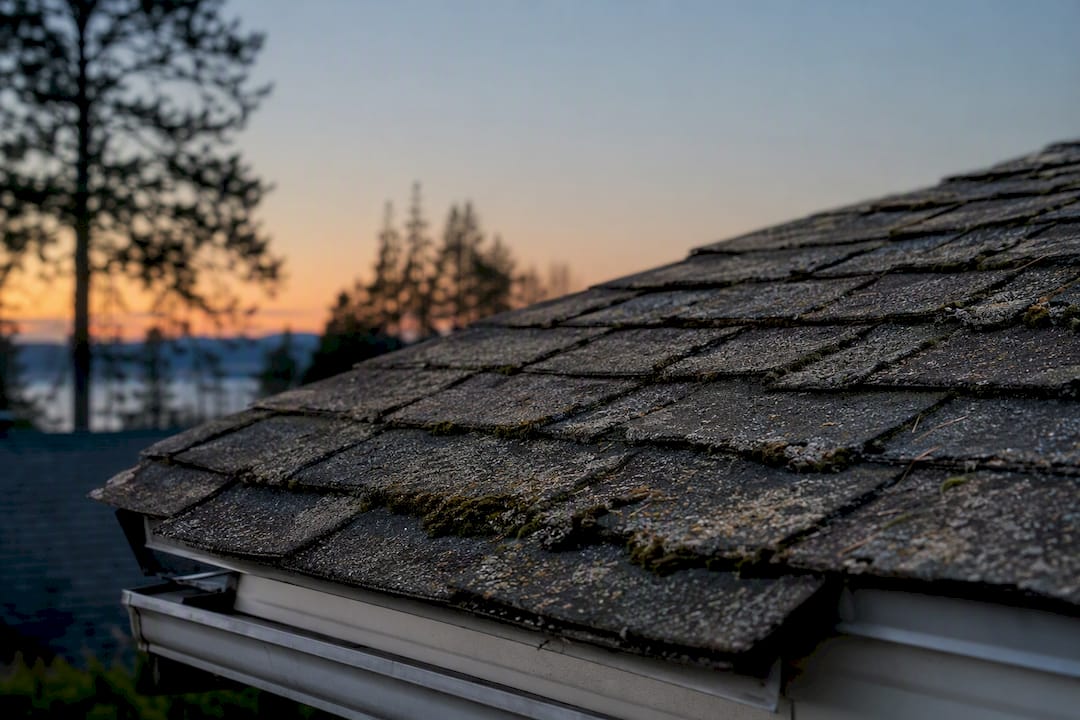
Your roof’s age determines whether your insurer pays to replace it at full cost or hands you a depreciated check that leaves you covering the gap. That switch from replacement cost value to actual cash value often costs homeowners thousands more than any premium hike ever would.
Do this now:
Pull your declarations page and confirm what payout method it lists for roof claims.
Call your agent to verify the roof age your carrier has on file. It’s often wrong.
Gather dated photos, permits, or invoices proving when the roof went on.
Insurers typically start paying closer attention at about a decade of roof age, with inspections common between 15 and 20 years, and non-renewal risk climbing sharply after roughly 20 years for standard asphalt shingle roofs.
Key Takeaways
Roof age drives insurance outcomes more through the switch from replacement cost to depreciated cash value payouts than through premium changes alone, and documentation is the homeowner’s strongest defense against downgrades or non-renewal.
Point | Details |
RCV vs. ACV matters most | An aging roof often shifts your claim payout from full replacement cost to a depreciated amount, a bigger financial hit than premium increases. |
Know your timeline | Expect scrutiny starting around 10 years, inspections between 15 and 20, and non-renewal risk climbing after 20 for asphalt roofs. |
Document everything | Keep dated invoices, permits, and a licensed inspection report showing remaining useful life on file with your agent. |
Material changes the clock | Metal, tile, and slate roofs push insurer scrutiny back decades compared to standard asphalt shingles. |
Get a broker’s view | South Lake Agency Insurance Brokers compares your roof profile across 20+ carriers at no broker fee, often finding better terms than a single insurer’s fixed rules. |
Table of Contents
How Insurers Use Roof Age in Underwriting
Insurers treat roof age as a stand-in for two things: how much useful life is left, and how likely you are to file a claim. A 25-year-old roof isn’t just older. Statistically, it’s closer to failure, more prone to wind and hail damage, and more expensive to fully replace if a storm tears through your neighborhood.
That risk calculation plays out differently depending on when your carrier looks at it.
New business underwriting: insurers often request roof photos or an inspection before issuing a policy on an older home.
Renewal review: carriers reassess roof age annually and can adjust terms, add exclusions, or decline to renew.
Mid-term action: insurers rarely cancel a policy outright over roof age alone. Age-driven changes almost always happen at renewal, not in the middle of your policy term.
Knowing this timeline matters because it tells you when to act, not just that you should.
What Happens at 10, 15, and 20 Years
Roof age doesn’t trigger one hard cutoff. Carriers tighten the rules in stages, and each stage carries its own practical consequence.
Roof Age | What Typically Happens |
— | Full replacement cost coverage, little to no scrutiny |
10-15 years | Underwriting questions, photo requests on new policies or renewals |
15-20 years | Inspections or contractor certifications often required |
20+ years | ACV switches, added endorsements, or non-renewal become common |
A few things follow from this timeline:
The 15 to 20 year window is where documentation starts to matter most, since this is when inspection requests become routine.
Carriers don’t apply these windows uniformly. Roof material shifts everything, which is covered further down.
A well-documented, well-maintained roof at 18 years can outperform a neglected one at 12 in an underwriter’s eyes.
RCV vs. ACV: The Real Financial Impact of an Aging Roof
Replacement cost value pays what it actually costs to put a new roof on your house today. Actual cash value pays that number minus depreciation, meaning your payout shrinks every year the roof ages.
Here’s a rough illustration. Say a full roof replacement costs $18,000. Under RCV, you’d receive close to that full amount after your deductible. Insurers commonly settle older roof claims on an ACV basis specifically because of this depreciation math.
A few details make the gap even wider:
Some policies include a roof payment schedule endorsement that caps payouts at a flat percentage once your roof crosses a certain age, regardless of actual depreciation.
Cosmetic damage exclusions on some endorsements mean hail dents or discoloration won’t be covered even if the roof still functions.
The difference between RCV and ACV usually dwarfs any premium savings from shopping around, which is why coverage form deserves more attention than price alone.
Documenting Your Roof’s Age and Condition
Insurers can’t verify what they can’t see, so the burden falls on you to build a paper trail before you need it.
Collect dated invoices or contracts from the original roof installation or most recent replacement, keeping in mind FHA loan requirements if you are financing your home purchase.
Pull permit records from your city or county building department, which often list the installation date.
Get a licensed roof inspection or contractor certification estimating remaining useful life, something regulators specifically recommend homeowners keep on file.
Take timestamped photos annually, especially after storms or repairs.
Pro Tip: Update your agent immediately after any roof replacement or major repair. Carriers won’t automatically know your roof is newer, and outdated records are one of the most common reasons homeowners get flagged for age they no longer have.
What to Do If You Face an Inspection or Non-Renewal Notice
Getting a letter about your roof doesn’t mean you’re out of options. It means it’s time to move quickly and methodically.
Request written documentation of the insurer’s specific concerns or inspection criteria.
Schedule an independent, dated inspection from a licensed contractor within days, not weeks.
Submit that report along with a formal reconsideration request to your carrier.
If denied, contact your state’s insurance regulator. Some states have statutes limiting age-only non-renewals, and an independent inspection can be enough to reverse a decision.
Before you decide anything:
Compare the actual cost of proactive replacement against your likely premium change if you keep the current roof.
Avoid replacing a roof reactively right before storm season. Contractors are busier and pricier, and rushed work invites future claim disputes.
Why Roofing Material Changes the Insurance Timeline
Calendar age only tells part of the story. A 20-year-old asphalt roof and a 20-year-old metal roof sit in completely different risk categories.
Asphalt shingles typically last 15 to 25 years, putting them squarely in scrutiny territory by their late teens.
Architectural shingles stretch to 25 to 30 years, buying homeowners several extra years before insurers start asking questions.
Metal, tile, and slate roofs can last 30 to 50 years or more, which pushes insurer scrutiny back significantly and often qualifies homeowners for material-based discounts.
If you’re weighing a replacement, ask your agent whether upgrading to a longer-lived material changes your roofing and siding coverage or opens up new discount eligibility.
How a Broker Helps When Your Roof’s Age Becomes a Problem
Roof-age disputes rarely have a one-size-fits-all answer. What resolves one homeowner’s non-renewal, an independent inspection, a material upgrade, a different carrier, won’t be the right fix for the next one.
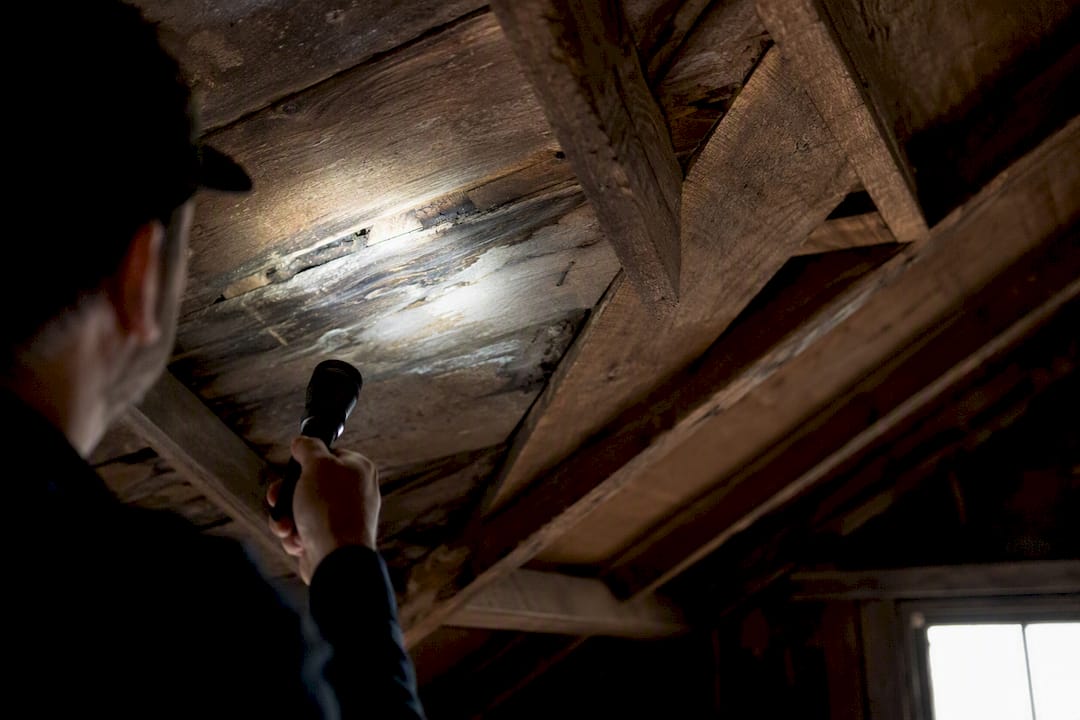
As an independent brokerage, South Lake Agency Insurance Brokers shops your situation across more than 20 carriers instead of pushing you back to a single insurer’s rulebook. That matters because one company’s automatic ACV switch at 18 years might be another’s non-issue until 25, depending on the material and inspection report on file. When you’re facing a downgrade or non-renewal, it’s usually smarter to talk to a broker before paying for a full replacement outright. Sometimes documentation and a carrier switch solve the problem for far less.
Get Ahead of Roof Age Before Your Insurer Forces the Issue
Waiting for a non-renewal letter puts you in a reactive position with a deadline and limited leverage. Getting ahead of your roof’s age, checking your declarations page now, gathering documentation, and talking to a broker before renewal, gives you options instead of an ultimatum.

South Lake Agency Insurance Brokers reviews your current roof documentation and shops it across 20+ carriers to find one that treats your roof’s actual condition fairly, not just its calendar age. If you’re a new homeowner still learning what your policy covers, our homebuyer insurance guide walks through exactly what to check before you’re locked into a policy that could downgrade your roof coverage in a few years. If you already own your home and want to know where you stand today, request a homeowners insurance quote and we’ll tell you plainly whether your current roof age puts you at risk with your existing carrier.
Where the Robotic Advice Around Roof Age Gets It Wrong
Most articles on this topic treat roof age like a countdown timer: hit year 20 and something bad automatically happens. That framing is lazy, and it leads homeowners to either panic too early or ignore the issue until a non-renewal letter shows up.
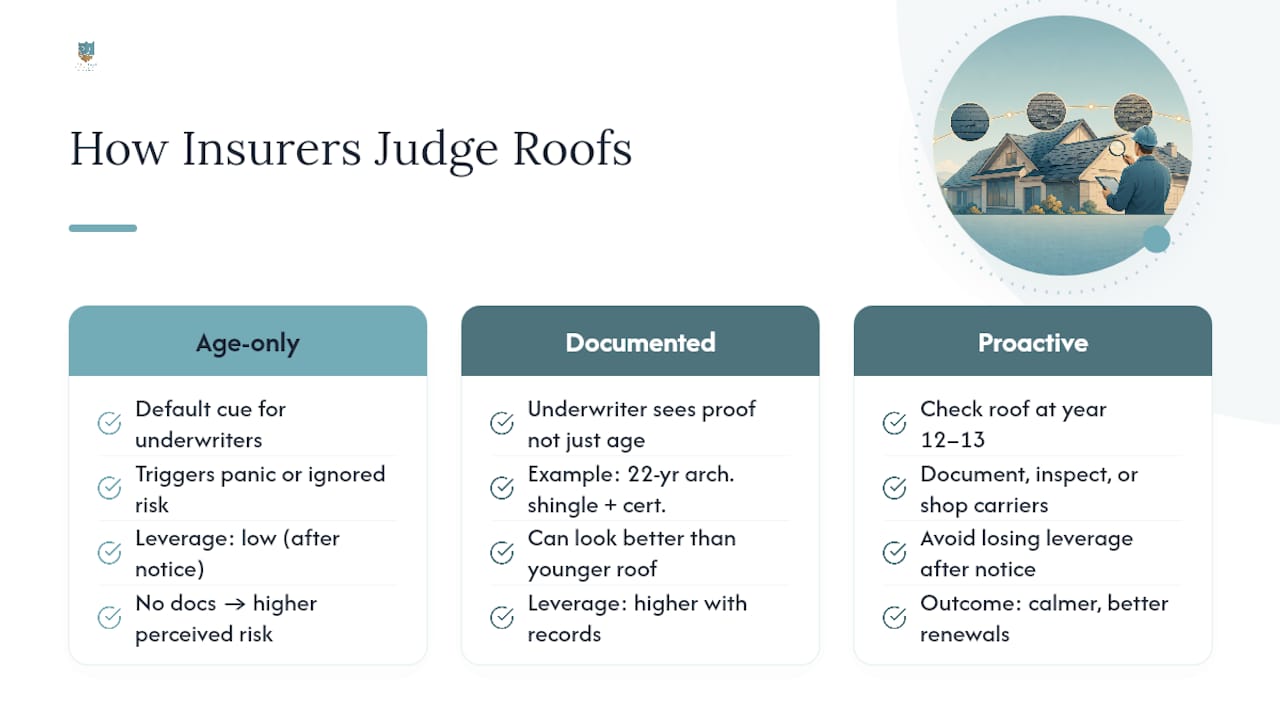
The more honest read is that carriers are making a probabilistic bet, and documentation is how you change the odds in that bet. A 22-year-old architectural shingle roof with a contractor certification and a clean inspection history can look better to an underwriter than a 12-year-old roof with zero paper trail and storm damage nobody reported. Age is the input insurers default to when they have nothing else. Give them something else.
The other overlooked piece is timing your own decisions, not just reacting to the insurer’s. Homeowners who wait for the non-renewal notice have already lost leverage. Homeowners who check their roof’s standing at year 12 or 13, while there’s still time to document, inspect, or shop carriers calmly, end up with far better outcomes than those scrambling after a letter arrives. The tools for that are not complicated. A dated photo, a permit copy, an inspection report. What’s missing usually isn’t information. It’s the habit of using it before a deadline forces the issue.
— Andrew
Sources
Recommended
Comments