




Insurance for Older Homes: What Determines Coverage

Yes, you can insure an older home. Coverage and price depend on your roof, wiring, plumbing, and how far the rebuild cost has drifted from the market value. Most declines come down to one of those four things, and most are fixable before you ever apply.
Here’s the fastest path to a bindable policy:
Get an inspection first. A four-point inspection covering roof, electrical, plumbing, and HVAC tells you exactly what an underwriter will flag before they flag it.
Fix or document the biggest red flag. If it’s knob-and-tube wiring or a 25-year-old roof, either start the repair or gather invoices showing it’s already handled.
Call a broker, not just one carrier. A single insurer’s “no” isn’t the market’s “no.” Different carriers price old houses very differently.
Pro Tip: If you’re closing on a home purchase and the wiring or roof isn’t fixed yet, ask about a short-term or excess & surplus (E&S) policy to satisfy your lender at closing, then requalify for standard coverage once repairs are done.
Key Takeaways
Insuring an older home comes down to fixing the biggest underwriting red flag first, then letting a broker shop that improved risk across multiple carriers.
Point | Details |
Wiring is the top decline reason | Knob-and-tube or ungrounded aluminum wiring triggers most refusals or restricted terms. |
Rebuild cost drives price | Homes built before 1940 often cost 10% to 20% more to insure due to restoration-grade rebuild costs. |
HO-8 has a real tradeoff | It fits when rebuild cost exceeds market value, but pays actual cash value on named perils only. |
E&S and FAIR plans are fallbacks | They cost more but keep a purchase moving while repairs get finished. |
South Lake Agency Insurance Brokers shops it for you | Access to 20+ carriers plus document and lender coordination, with no broker fees. |
Table of Contents
What Raises or Lowers Premiums for Older Houses
Insurers price age, not sentiment. A house built in 1920 doesn’t get charged more because it’s old. It gets charged more because of what “old” usually means underneath the plaster.
The rate drivers that matter most:
Roof age and material. A slate or wood-shake roof costs far more to replace than asphalt shingle, and insurers price the rebuild, not the current look.
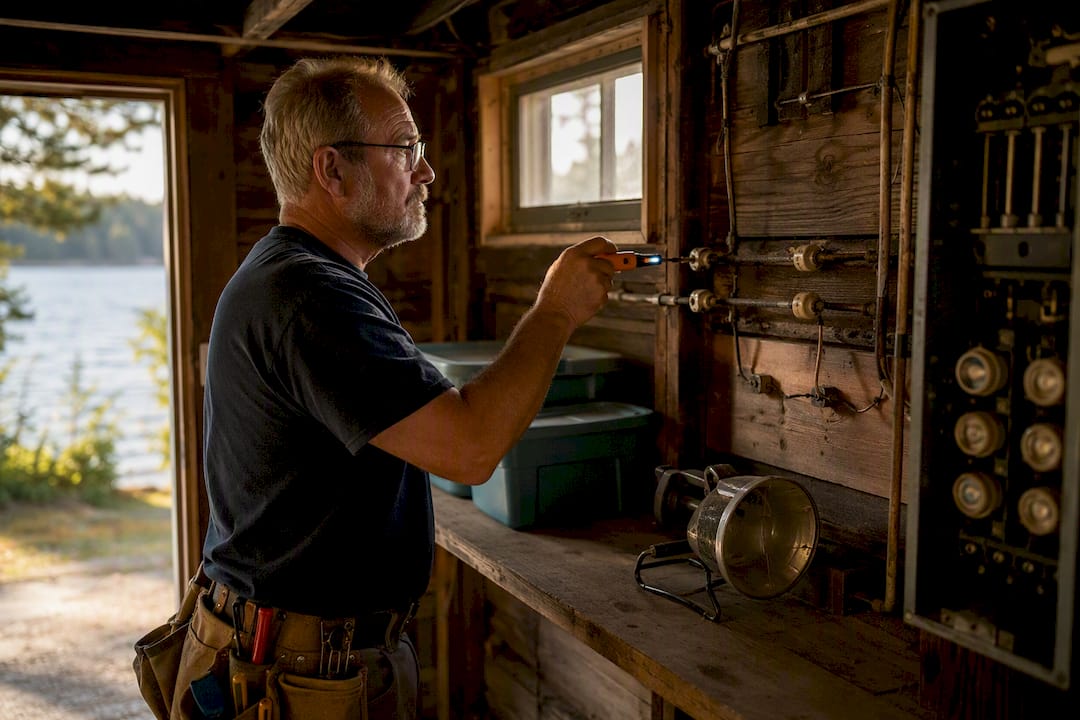
Wiring type. Knob-and-tube or ungrounded aluminum wiring is the single most common reason carriers decline or restrict coverage outright.
Plumbing materials. Galvanized or polybutylene pipe raises water-damage risk and often triggers an underwriting flag.
HVAC age. Systems past 15 to 20 years get treated as a near-term claim risk.
Rebuild cost vs. market value. In older neighborhoods, rebuild cost can run well above resale value, which is where coverage gaps start.
Historic-district requirements. Preservation rules can force period-accurate materials during a rebuild, which is expensive and slow.
Claims and maintenance history. A spotty repair record signals more risk than the house’s actual age.
Homes built before 1940 often cost 10% to 20% more to insure than comparable newer construction, mainly because restoration-grade materials and skilled trade labor push rebuild costs higher. Knob-and-tube wiring specifically pushes many insurers toward decline, restricted terms, or mandatory upgrade timelines rather than a flat rejection.
Policy Types and Endorsements That Fit Older or Historic Homes
A standard HO-3 policy works fine for plenty of older homes, provided the systems have been updated and the rebuild cost lines up with what the policy actually covers. Where that alignment breaks down, you need something built for the gap.

HO-3 pays replacement cost on the dwelling and named perils on personal property. It’s the default, and it’s often enough if the house has been maintained.
HO-8 is built for homes where rebuild cost outpaces market value, which happens a lot in older neighborhoods with modest resale prices but expensive-to-replicate construction. The tradeoff: HO-8 typically covers named perils only and pays actual cash value, not full replacement cost, so you’re covered for less than it would actually cost to rebuild.
Historic-home or restoration-specific policies exist through specialty carriers and cover period-accurate materials and craftsmanship, which standard replacement-cost coverage usually excludes.
The endorsements worth prioritizing:
Ordinance-or-law coverage pays for code-mandated upgrades during a rebuild, something most standard policies exclude entirely.
Guaranteed or extended replacement cost adds a cushion (often 10% to 50% over your limit) so a spike in labor or materials doesn’t leave you short.
Restoration-materials endorsements cover the added cost of matching original trim, plaster, or masonry.
Water and sewer backup coverage matters more in older homes with aging municipal connections.
Loss-of-use limits need to reflect a longer rebuild timeline, not the standard 12 months.
Pro Tip: If your budget is tight, buy ordinance-or-law coverage first. It’s usually cheap relative to the payout, and it’s the gap that bankrupts a rebuild budget fastest.
Check our full breakdown of coverage types to see how these endorsements stack against a base policy.
Where to Go If Mainstream Insurers Decline or Limit Coverage
A decline from one carrier isn’t the end of the search. It just means you’ve left the standard market.
Excess & surplus (E&S) carriers write risks standard insurers won’t touch, at a real premium, often as a bridge while you complete upgrades.
Specialty historic-home programs exist specifically for pre-1940 construction and price restoration materials realistically instead of guessing.
State FAIR plans are the true last resort: narrower coverage, higher cost, but available when nothing else will bind.
Short-term policies can cover you for a defined window while an electrician finishes a rewire.
These markets cost more and cover less than a standard policy, and that’s the trade you’re making for availability. E&S terms often run six to twelve months, giving you a defined runway to finish repairs and requalify for standard coverage.
Pro Tip: If a lender is waiting on proof of insurance for closing, a short-term E&S binder can satisfy them while your electrician finishes the rewire. Just confirm with your broker that the timeline matches your lender’s requirement.
Realistic Costs, Inspections, and Timelines for Upgrades
Budgeting for an older home means budgeting for what the inspector finds, not just the premium quote.
Item | Typical Cost or Range |
Knob-and-tube rewiring (full home) | $5,000 to $35,000, depending on access and home size |
Electrical inspection | Often bundled into a four-point inspection at binding |
Extended replacement cost endorsement | Typically adds 10% to 50% over the dwelling limit |
Historic home premium uplift | 10% to 20% higher than comparable newer construction |
Most insurers give you 30 to 90 days after binding to complete required repairs, though that window varies by carrier and by how severe the risk is. Restoration timelines run longer than people expect: a certified restoration appraisal often projects 12 to 18 months for a historic rebuild versus 4 to 6 months for a standard one, which matters when you’re setting your loss-of-use limit.
Pro Tip: Collect permits, electrician invoices, and any pre-purchase inspection report before you apply. Underwriters move faster when they can see the work is already documented, not promised.
How to Shop for Coverage and What to Ask an Agent
Walking into a quote request with the right paperwork changes how fast you get bound and what you get bound at.
Bring these documents:
A recent four-point inspection report (roof, electrical, plumbing, HVAC).
Electrician and plumber invoices for any completed upgrades.
Roof replacement or repair records with dates.
A historic appraisal or contractor restoration estimate, if applicable.
Photos of major systems and any unique architectural features.
Permit records for past renovation work.
Questions worth asking directly:
How do you price restoration-grade materials if I need to rebuild?
Will my policy include ordinance-or-law coverage, or is that a separate endorsement?
What specifically triggers a nonrenewal on a home like mine?
What’s your standard timeline for required upgrades after binding?
Watch for red flags: blanket exclusions on original systems, no extended loss-of-use for long restorations, or an insurer pushing you toward actual-cash-value-only coverage without offering replacement cost options. Any of those should send you to a different carrier.
A Broker’s View on What Actually Gets Older Homes Covered
In practice, the homeowners who get the best terms are the ones who document early and negotiate hard during the purchase. Ask sellers for repair credits on anything an inspector flags. Underwriters routinely accept a partial fix, like new AFCI breakers on remaining knob-and-tube circuits, as interim mitigation while a full rewire gets scheduled. That buys you standard coverage sooner than waiting for perfect.
How South Lake Agency Insurance Brokers Helps Older-Home Owners Get Covered
South Lake Agency Insurance Brokers is the alternative to shopping carrier by carrier on your own. We check your risk profile against 20+ carriers at once, so a knob-and-tube decline from one insurer doesn’t stall your entire purchase timeline.

Here’s what that looks like in practice:
We help you gather the inspection reports, invoices, and permits underwriters actually want to see before they’ll bind.
We coordinate directly with your lender and title company, so a temporary E&S policy at closing doesn’t create paperwork headaches.
We compare HO-3, HO-8, and specialty historic programs side by side instead of quoting just one option.
If your current policy quote came back higher than expected, or a carrier already said no, request a homeowners insurance quote and we’ll find out which of our 20+ carriers actually wants your risk.
Frequently Asked Questions
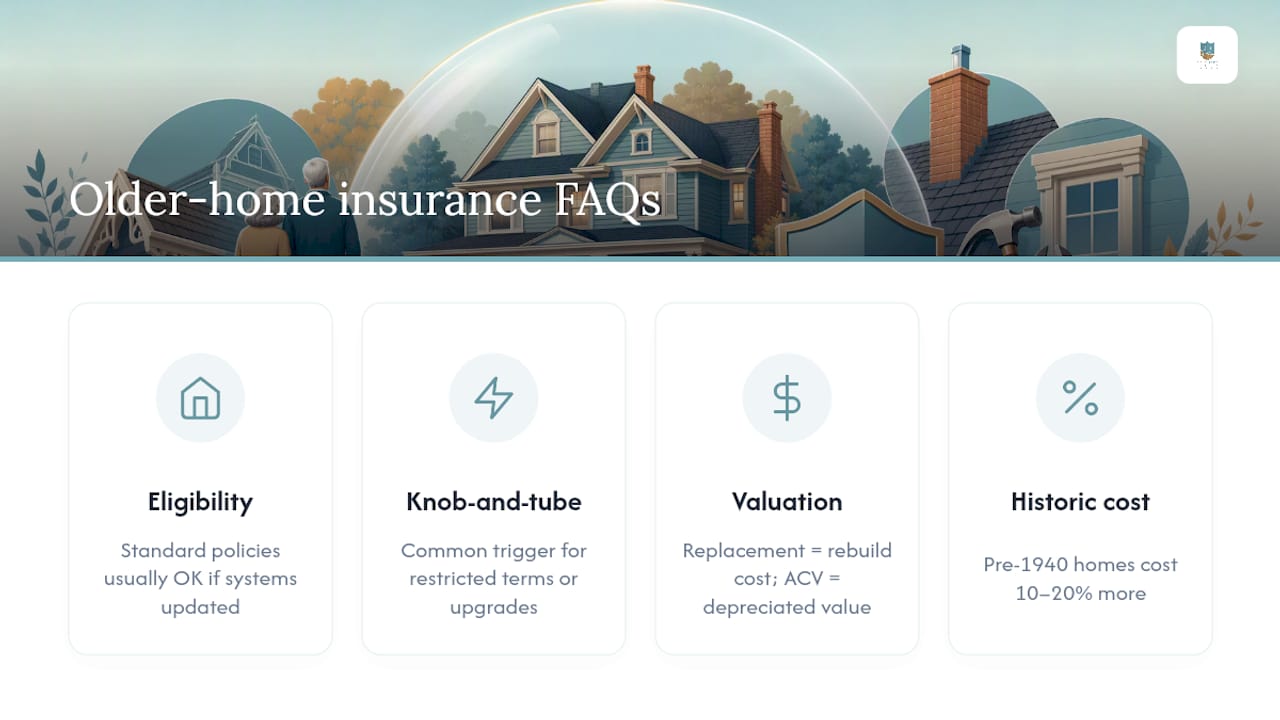
Can you get standard home insurance for a 100-year-old house? Often, yes, if the roof, wiring, plumbing, and HVAC have been updated and the rebuild cost lines up with your policy limit. If not, expect an insurer to require upgrades or push you toward an HO-8 or specialty program.
Does knob-and-tube wiring always mean a decline? Not always, but it’s the single most common trigger for restricted terms or mandatory upgrade timelines. Some carriers will bind with a defined replacement window; others decline outright.
What’s the difference between replacement cost and actual cash value? Replacement cost pays what it actually costs to rebuild today. Actual cash value subtracts depreciation, which can leave you well short of covering a real rebuild on an older home.
How much more does it cost to insure a historic home? Historic-designated homes built before 1940 often run 10% to 20% higher than comparable newer construction, largely due to restoration material and labor costs.
What if no standard insurer will cover my house? Excess & surplus carriers, specialty historic programs, and your state’s FAIR plan are the next stops. They cost more and cover less, but they keep you insured while you complete repairs.
This article is general information, not a substitute for advice from a qualified financial advisor. Consult a qualified financial professional about your own circumstances before acting on anything here.
Sources
Recommended
Comments